
Buying a car, or just wondering what that "cambelt due" note really means? Whether your engine uses a cambelt or a timing chain makes a real difference to running costs and reliability. This guide explains the cambelt vs timing chain question in plain English: how each works, how reliable they are, what they cost, and which is the safer bet.
Cambelt vs Timing Chain: What's the Difference
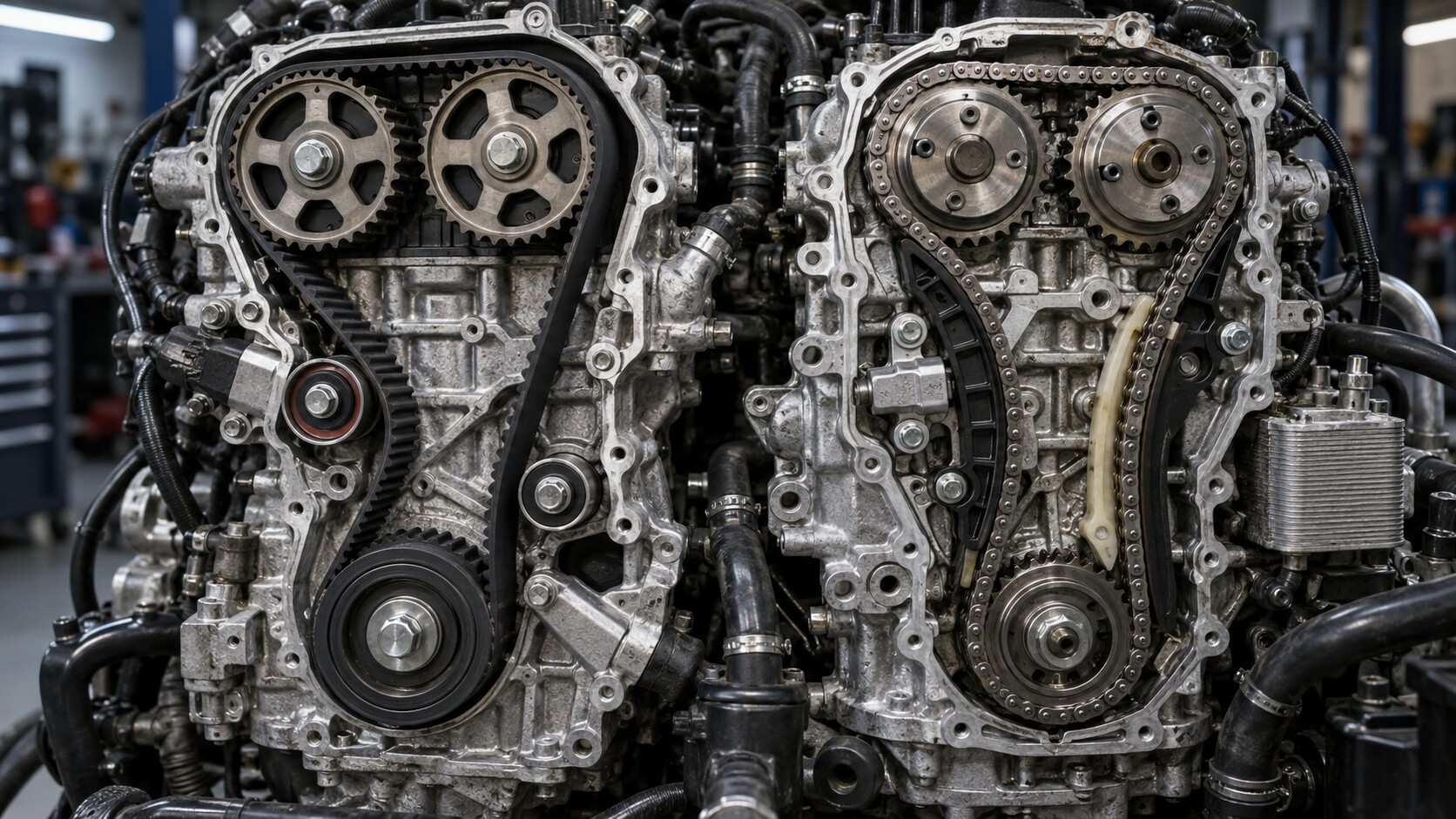
Both a cambelt and a timing chain do exactly the same job: they keep the crankshaft and camshaft turning in perfect sync, so your engine's valves and pistons never collide. The difference is what they're made of and where they sit.
A cambelt, also called a timing belt, is a toothed rubber belt that usually runs on the outside of the engine in a dry casing. A timing chain is a metal chain that sits inside the engine and is lubricated by the engine oil, much like a bicycle chain. That single difference, rubber on the outside versus metal running in oil, shapes the whole cambelt vs timing chain debate, because it affects how long each lasts, how it fails, and what it costs to put right.
How Reliable Is a Cambelt
A cambelt is perfectly reliable, right up until it isn't. Rubber wears and degrades over time, so a cambelt has a fixed lifespan and must be replaced before it fails. The catch is that it gives no warning: there's no noise and no warning light, it simply works until it snaps.
That's why the timing belt replacement interval matters so much. Most manufacturers specify a change every four to five years, or somewhere between 60,000 and 100,000 miles, whichever comes first, though it varies by engine, so always check your handbook. Age counts as much as mileage, because the rubber degrades even on a car that barely moves, so a belt over five years old should be changed regardless of distance. Stick to the schedule and a cambelt is very dependable. Ignore it, and on most modern engines a snapped belt causes catastrophic, expensive damage.
How Reliable Is a Timing Chain
A timing chain is built to last much longer, often the entire life of the engine, with no scheduled replacement. Because it's metal and runs in oil, it doesn't degrade the way rubber does, which is why chains are generally seen as the lower-maintenance option.
However, "lifetime" doesn't mean maintenance-free. The most common timing chain problems come down to oil: skip your oil changes or use the wrong grade, and the chain, its tensioners and guides wear prematurely. A stretched chain often announces itself with a rattling noise, especially on cold start, or a timing-related warning light. Caught early it can be sorted, but a neglected chain that fails can cause the same catastrophic engine damage as a snapped belt. So a chain is very reliable, but only if the engine is serviced properly with the right oil.
What About Wet Belts
There's a modern twist worth knowing about: the wet belt. Some newer engines, such as the Ford 1.0 EcoBoost and the PSA 1.2 PureTech found in some Peugeot, Vauxhall and Citroën models, use a timing belt that runs inside the engine, lubricated by the oil, rather than in a dry external casing.
The idea is to combine a belt's quietness with a chain's lubrication, but in practice wet belts have a mixed reputation. Over time the belt can break down and shed debris that blocks the oil pump, risking serious engine damage. If your car has one, strict, on-time oil changes and earlier belt replacement are essential. It's a good example of why knowing exactly what your engine uses really matters.
Cost: Cambelt vs Timing Chain
Cost is where the two really diverge. In 2026, a typical cambelt change cost in the UK is around £300 to £600 at an independent garage, rising to roughly £500 to £900 if the water pump is done at the same time, which is strongly recommended since it's already accessible. Complex or premium engines can push past £1,000, and main dealers often charge noticeably more.
A timing chain, by contrast, isn't a routine service item, but when it does need replacing the bill is higher, typically £700 to £1,500 or more, because the job is far more labour-intensive and often means partially dismantling the engine. Either way, both figures are trivial next to the cost of ignoring the problem: a snapped belt or failed chain on most modern engines means £1,500 to £3,000 or more in repairs, sometimes enough to write off an older car. You can see our transparent pricing before any work goes ahead.
The Verdict: Which Is More Reliable
So, in the cambelt vs timing chain contest, which wins? The honest answer is that it depends on what you mean by reliable.
A timing chain usually lasts longer and needs no scheduled replacement, so over the life of the car it's often the lower-hassle choice, as long as it's serviced properly with the right oil. A cambelt is entirely predictable and cheaper to replace, but it comes with a hard deadline you can't ignore. Neither is truly maintenance-free, and both can be ruinous if neglected. In practice, the most reliable engine is the one that's looked after: chains need good oil and regular servicing, belts need replacing on time, and wet belts need both.
If you're unsure what your car uses or when a change is due, a garage can tell you in minutes. Simply Motoring is a DVSA-approved garage in Doncaster offering cambelt and timing belt replacement, diagnostics and all our servicing and repairs in-house, with honest advice on what your engine actually needs.
Conclusion
Cambelt or timing chain, the real key to reliability is staying on top of maintenance. Change your cambelt on schedule, keep a timing chain healthy with regular oil changes, and be extra diligent if you have a wet belt, and either can give years of trouble-free service. Neglect it, and it's one of the most expensive failures a car can have.
For drivers in Doncaster, Simply Motoring offers DVSA-approved testing, honest pricing, expert technicians and any repairs carried out on site, with no jargon and no pressure. Book in with Simply Motoring today, or get in touch to check when your cambelt is due.