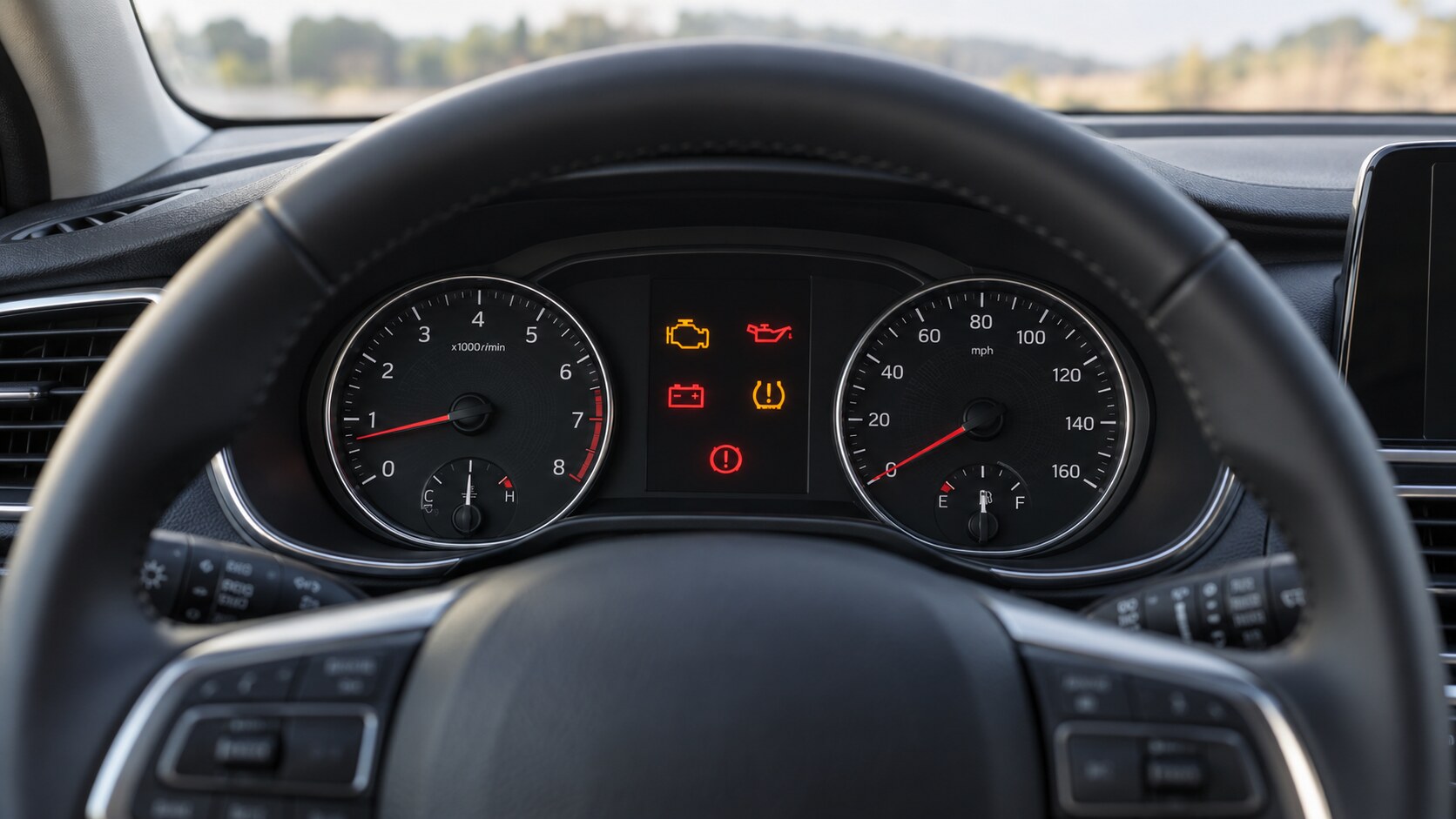
A warning light glowing on your dashboard can send a jolt of worry through any driver, but most are far less alarming than they first seem, as long as you know what they mean. This complete guide decodes dashboard warning lights and their meaning, from the ones you can drive on to the ones that mean stop right now, so you'll always know how worried to be and what to do next.
Understanding Dashboard Warning Lights: The Colour Code
Before learning individual symbols, it helps to know the one rule that covers them all: colour tells you how urgent it is, just like traffic lights.
- Red means stop. It signals a serious problem that could damage the car or put you in danger, so you should pull over safely as soon as you can.
- Amber or orange means caution. Something needs attention soon, but you can usually drive on carefully and get it checked before long.
- Green or blue is simply information, telling you a system such as your headlights or indicators is switched on. No action needed.
Modern cars can display dozens of different symbols, and while the exact designs of UK dashboard symbols vary slightly between manufacturers, this colour code is universal. Get the colour right, and you're already halfway to understanding the warning.
Red Warning Lights: Stop and Check
Red lights are the ones to take seriously. If one appears, find a safe place to stop and investigate rather than driving on. The most important red lights are:
- Oil pressure (an oil-can symbol): low oil pressure can wreck an engine in minutes, so stop as soon as it's safe and check your oil level.
- Engine temperature (a thermometer in waves): your engine is overheating. Stop, let it cool, and never remove the coolant cap while hot.
- Battery or charging (a battery symbol): the charging system has a fault, and the car may soon lose electrical power.
- Brake system (a circle with an exclamation mark, or the word BRAKE): this could be the handbrake left on, low brake fluid, or a brake fault. Never ignore it.
- Airbag (a person with a ball): a fault in the airbag system, which may mean it won't deploy in a crash.
If a red light appears while driving, treat it as urgent. Carrying on can turn a small repair into a very expensive one.
Amber and Orange Warning Lights: Caution
Amber and orange lights are the most common, and the good news is they rarely mean stop immediately. Instead, an orange warning light on your car is usually telling you to get something looked at soon. The usual ones include:
- The engine management light (an engine outline), which we'll cover in detail next.
- ABS (the letters ABS in a circle): a fault in the anti-lock braking system. Your normal brakes still work, but the anti-lock function may not.
- Tyre pressure (TPMS) (a horseshoe shape with an exclamation mark): one or more tyres is low, so check and inflate them.
- Traction control or ESP (a car with wavy skid lines): this often flickers on in slippery conditions, which is normal, but if it stays on there may be a fault.
- Diesel-specific lights such as the glow plug (a coil symbol), DPF and AdBlue warnings, which tell you the emissions system needs attention.
An amber light isn't a reason to panic, but it isn't one to ignore either. Book it in before it becomes a bigger problem.
The Engine Warning Light Explained
The engine warning light, also called the engine management light or check engine light, is the one that worries drivers most, partly because it can mean so many things. It's an amber outline of an engine, and it can be triggered by anything from a loose fuel cap or a faulty sensor to an emissions problem or a misfire.
Here's the key thing to know: how it behaves tells you how urgent it is. A steady engine warning light usually means you can drive on gently and get it checked soon, though you shouldn't leave it indefinitely. A flashing engine warning light is more serious, often signalling a misfire that can damage the catalytic converter, so you should ease off the accelerator and get it looked at straight away. Because the causes are so varied, the only way to know for sure is a diagnostic check, which reads the fault codes stored in the car's computer and points straight to the problem.
Green and Blue Lights: Just Information
Not every light is a warning. Green and blue symbols are there simply to tell you a system is active, and they need no action at all.
Green lights usually confirm something is switched on and working normally, such as your indicators, side lights or cruise control. A blue light almost always means your main-beam headlights are on, a handy reminder to dip them for oncoming traffic. Some cars also use green for eco or automatic stop-start modes. If a light is green or blue, you can relax: it's information, not a fault.
What to Do When a Light Comes On
When any light appears, run through three quick questions: what colour is it, is it steady or flashing, and does the car feel or sound different? A red or flashing light means stop safely and investigate or call for help. A steady amber light means you can usually continue with care, but get it checked soon. And a green or blue light means carry on as normal.
Whatever the colour, don't simply ignore it, and never be tempted to cover it up. Modern cars store fault codes electronically, so a quick diagnostic scan is the fastest way to know exactly what's wrong. Simply Motoring is a DVSA-approved garage in Doncaster offering diagnostics and all our servicing and repairs in-house, with honest pricing and no pressure. If a warning light has you puzzled, we can read the codes and tell you exactly what it means, and what it doesn't.
Conclusion
Dashboard warning lights and their meaning come down to one simple idea: colour tells you how urgent it is. Red means stop, amber means check it soon, and green or blue is just information. Learn that, keep an eye out for a steady versus flashing engine light, and you'll never be caught out by a glowing dashboard again.
For drivers in Doncaster, Simply Motoring offers DVSA-approved testing, honest pricing, expert technicians and diagnostics carried out on site, with no jargon and no pressure. Book a diagnostic check with Simply Motoring today, or get in touch if a warning light has you worried.